Exam Season in Student Housing: A Practical Riyadh Guide

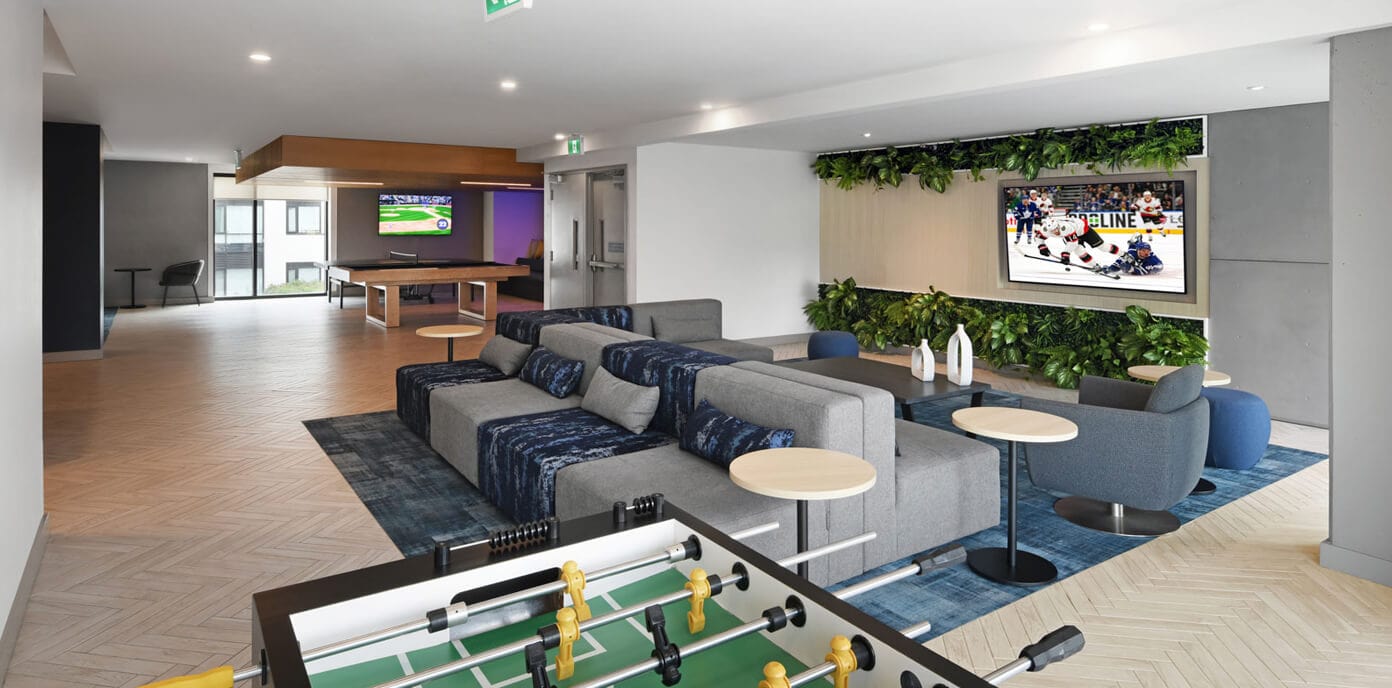
AI-generated editorial illustration, not a photograph of Lavuren facilities.
An exam-season plan for student housing in Riyadh needs three foundations: an up-to-date official timetable, clear arrangements for using the space and a fallback when concentration or connectivity is interrupted. A list of subjects is not enough. The same period involves leaving for assessments, returning to the room, resting, preparing food and sharing facilities with people whose schedules may be completely different from yours.
For your ordinary term-time routine, use the separate weekly study plan for shared accommodation. This guide focuses on the short academic period when assessments cluster and everyday residence arrangements need adjustment. The planning examples are not university timetables, Lavuren rules or offers of a particular length of residence. They do not promise grades, uninterrupted quiet or specific facilities.
Prepare the conditions as well as the revision
Four parts of an exam-season housing plan
Confirm
Start with the official timetable and its updates.
Coordinate
Discuss how the space will be used.
Prepare
Know the limits of your backup options.
Adjust
Choose the next task from what actually happened.
Use the official timetable before organising your days
Collect assessment information from the university or course’s official channel, rather than relying on an old screenshot circulating among students. Record the subject, date, start time and venue or platform, and mark anything requiring clarification. Similar building names or different class groups can cause confusion. A plain but accurate reference is more useful than an attractive calendar containing an assumption you have not checked.
Keep the current version somewhere accessible and identify the source of each change. Do not interpret an unclear time alone or assume a roommate will forward every update. Ask the appropriate academic contact, then change the arrangements that depend on the answer. If a venue or assessment time moves, travel, revision and rest plans may need updating too. Correcting one calendar cell does not automatically correct the rest of the day.
Choose a revision output instead of a vague block of time
“Study this subject today” gives you little evidence of progress. Define something you can check: attempt an allowed set of questions, explain a concept without looking at the notes or identify errors to raise with the instructor. Gather the relevant material before the session so that the beginning is not spent searching scattered folders. The purpose is to know what deserves the available attention, not merely to occupy a desk for a long period.
When several assessments approach together, consider timing, remaining work and understanding rather than selecting only the subject you enjoy most. Leave room for a topic that proves harder than expected. Discovering a gap is useful information for the next session; it is not proof that the whole plan failed. Follow course rules about permitted resources, including any restrictions on digital tools, collaboration or materials shared by other students.
Make a specific request about quiet and shared use
If you share a room or are affected by nearby activity, communicate the important periods without distributing your complete personal schedule. Explain when you need silent reading, when you will make a call and when you expect to leave. Ask for realistic coordination within the residence rules. An approaching assessment does not create unlimited authority to stop everyone else’s normal permitted activities, particularly when their academic or work schedules differ.
Ask the responsible team about actual quiet rules if they are unclear. Hours published by another university or accommodation provider do not establish Lavuren’s policy. Discuss behaviours rather than general demands: for example, reducing voice levels near the sleeping area or coordinating use of a potentially noisy appliance. For a repeated interpersonal problem, consult the roommate conflict guide instead of reopening the whole disagreement whenever a revision session is interrupted.
Reset the study area without redesigning the whole room
Start with the surface you will actually use, the current subject’s materials and lighting appropriate to the task. Put other belongings in permitted storage rather than moving them into a corridor or someone else’s working area. Assessment season does not require a decorating project or a large purchase of equipment. A useful change reduces repeated searches for a page, charger or file while keeping everyday movement and access clear.
Do not alter fixed furniture, wiring or equipment without checking the relevant permission. If a fault affects your use of the space, report it through the confirmed channel with a practical description; neither an immediate repair nor a particular alternative is assumed. The student room organisation guide can help with layout questions, while the team must confirm the features and services attached to the actual room.
Check what you can retrieve, not only what looks familiar
Choose an activity that reveals understanding. Close the reference and explain an idea, or attempt an allowed question before checking where the reasoning went wrong. Keep unresolved questions in a small list instead of rereading every page at the same pace. If your method requires speaking aloud, arrange a suitable permitted time or place rather than making everyone nearby participate in your revision environment.
For educational background, UC San Diego’s learning resources discuss retrieval and spaced practice. That does not make a particular session length a guaranteed formula or replace your course requirements. Use the result of a practice attempt to choose later work. Avoid leaked assessments or forms of assistance prohibited by the instructions governing your examination.
Check an alternative location before you need it
A bedroom may not suit every type of revision at every time. Identify a permitted alternative and confirm its hours and access conditions, such as a university space you are entitled to use. Then work out how you would reach it. Do not assume that a residence has a study lounge or that a particular library remains open throughout assessment season. A backup is a checked option, not an unplanned trip to search for somewhere to sit.
If you consider a café, check the practical conditions instead of relying on a photograph: connectivity, power, background activity and seating requirements may all matter. The study-café checklist helps frame those questions but cannot guarantee a seat or a constant noise level. You can also change the task: silent reading may remain practical in the room while a spoken discussion waits for an appropriate location.
Prepare materials and technical instructions for online assessments
For an online assessment, follow the institution’s instructions on devices, browsers, identification, location and any supervision requirements. Test the permitted login process beforehand and identify the academic contact for a technical difficulty. Do not install software from an unverified source or share account credentials in the name of quick assistance. Watching a recorded lecture and taking a supervised assessment involve different conditions, which must come from the responsible academic authority.
Organise revision material that you are allowed to download and check what can be accessed offline. Do not photograph or record an examination without authorisation. The student accommodation connectivity guide can help you prepare questions about your normal study needs. Any alternative connection still needs checking; mentioning one here does not confirm that a specific service or device is supplied at Lavuren.
Reduce friction around meals, laundry and clearing up
Plan what you can actually do using confirmed facilities and the residence rules, rather than leaving every routine task until it collides with revision. Keep a short list of essentials and identify what can be prepared ahead of the assessment day. Where facilities are shared, respect other residents’ turns and access. An examination does not justify occupying equipment or leaving belongings in the way indefinitely.
The student meal-planning guide offers organisational ideas without turning food preparation into another large project. Defer unnecessary rearranging or shopping, but keep everyday responsibilities manageable. Saving attention comes from reducing repeated small decisions, not from abandoning hygiene or assuming someone with a later assessment will do everything. If a task is genuinely shared, discuss responsibility rather than silently assigning it to the person whose schedule appears less busy.
Keep rest from becoming a continuing negotiation
When you finish a revision session, put the materials together and leave a brief note about where to restart. This reduces the need to reopen every file simply to remember what remains. Separate work and rest as far as your confirmed space allows. The article does not prescribe a universal sleep duration or provide medical advice; its aim is to reduce avoidable conflict between different uses of the room.
If a roommate’s schedule differs, discuss light, sound and entering or leaving the room within arrangements you can reasonably make. Do not assume that someone resting is less committed, or require her to prove how stressful her own day is. If distress or exhaustion becomes difficult to manage, seek an appropriate qualified or university support service. A roommate is not responsible for diagnosing a problem or supplying specialist support.
A planning framework for the days around an assessment
The table is an editorial example to adapt to your actual timetable, not a university schedule or an offer of accommodation for a specified period. Keep official times and procedures separate from guesses. If you need an academic adjustment, ask through the institution’s proper channel. A private arrangement about the room cannot substitute for authorisation from the people responsible for the assessment.
| Stage | Confirm | Practical housing action |
|---|---|---|
| Before assessments cluster | Official times, venues and requirements | Discuss shared use and check an alternative study option. |
| Before each assessment | Revision priorities and permitted materials | Put the required items together in a known place. |
| When preparing to leave | Destination, timing and required identification | Leave shared surfaces accessible to others. |
| After returning | The next academic task | Reset briefly and identify the next suitable session. |
Confirm the assessment destination, not just the university name
Your usual teaching building may not be the assessment venue, and the relevant access point may be different. Review the official details and decide on an appropriate route and alternative. A residence being near a landmark does not establish the ease of every journey. This guide supplies no distance or journey time from Lavuren to a particular university. Obtain the residence details from the team and verify the destination relevant to your assessment.
The location page helps prepare your enquiry, while current transport and route information require an appropriate source. Gather what you need before it is time to leave, and allow for your circumstances rather than planning everything around one optimistic estimate. If the venue changes, reconsider the activities connected to the journey as well as the assessment itself.
When the plan breaks, preserve the task rather than the ideal day
If the environment changes, first ask whether the task needs quiet, connectivity or conversation. Move the suitable task to the option you have, instead of insisting on a session whose conditions no longer exist. Reviewing a saved error list offline may be possible while a discussion waits. Changing the method does not cancel the objective if you remain clear about the output you are working towards.
If a technical problem occurs during a live online assessment, follow the procedure set by the academic institution and report it in the permitted way without sharing questions or private data. Contacting residence maintenance does not replace an academic incident report. Keep the description accurate and ask the authorised person what happens next, rather than improvising a workaround that could breach assessment rules or compromise your account.
A worked example: two students, different assessments
Imagine two students whose deadlines differ. One needs to explain a concept aloud, while the other is reading silently. Instead of automatically dividing the room into equal time slots, they begin with the tasks and the options they have confirmed. Silent work stays in the room, and the spoken discussion moves to an appropriate permitted time or location. They agree to review the arrangement if either timetable changes.
The useful feature is not that one plan is best for everyone. It is that different tasks are not treated as evidence of poor commitment. If no alternative is available or the arrangement fails, the issue remains a question for the appropriate residence or university contact. The example does not establish that Lavuren provides a particular facility or that changing rooms during a busy period is possible or desirable.
Your pre-assessment checklist
- Check the latest time, venue and instructions through the official source.
- Define the next revision output rather than listing only the subject.
- Prepare permitted materials and know how to access them.
- Review the shared-space arrangement and actual quiet rules.
- Confirm the fallback location or connection and its limits.
- Organise departure and everyday tasks without blocking other residents.
Frequently asked questions
Should I change accommodation immediately before exams?
Not automatically. Assess what can be arranged where you are and ask about actual alternatives if an essential requirement remains unresolved. Another room or an immediate move is not assumed.
Can I rely on complete quiet throughout assessment season?
No. Check the rules, discuss your needs and prepare a suitable backup. Respectful shared living does not mean daily activity stops or that absolute silence is guaranteed.
Do another university’s quiet hours apply here?
No. External examples illustrate an approach only. Your institution sets assessment requirements, and the responsible residence team confirms the accommodation rules.
Educational resources and your next step
See Newcastle University’s exam-season guidance for a residence-based perspective and UC San Diego’s learning resources for educational background. Their services and policies belong to those institutions and do not establish what Lavuren provides.
When comparing room options or resident services, ask about the requirements that affect your actual use of the space. Contact the team to confirm details and residence arrangements. Choosing student housing in Riyadh for your needs depends on clear information and workable plans, rather than a promise that a building will guarantee concentration or academic results.