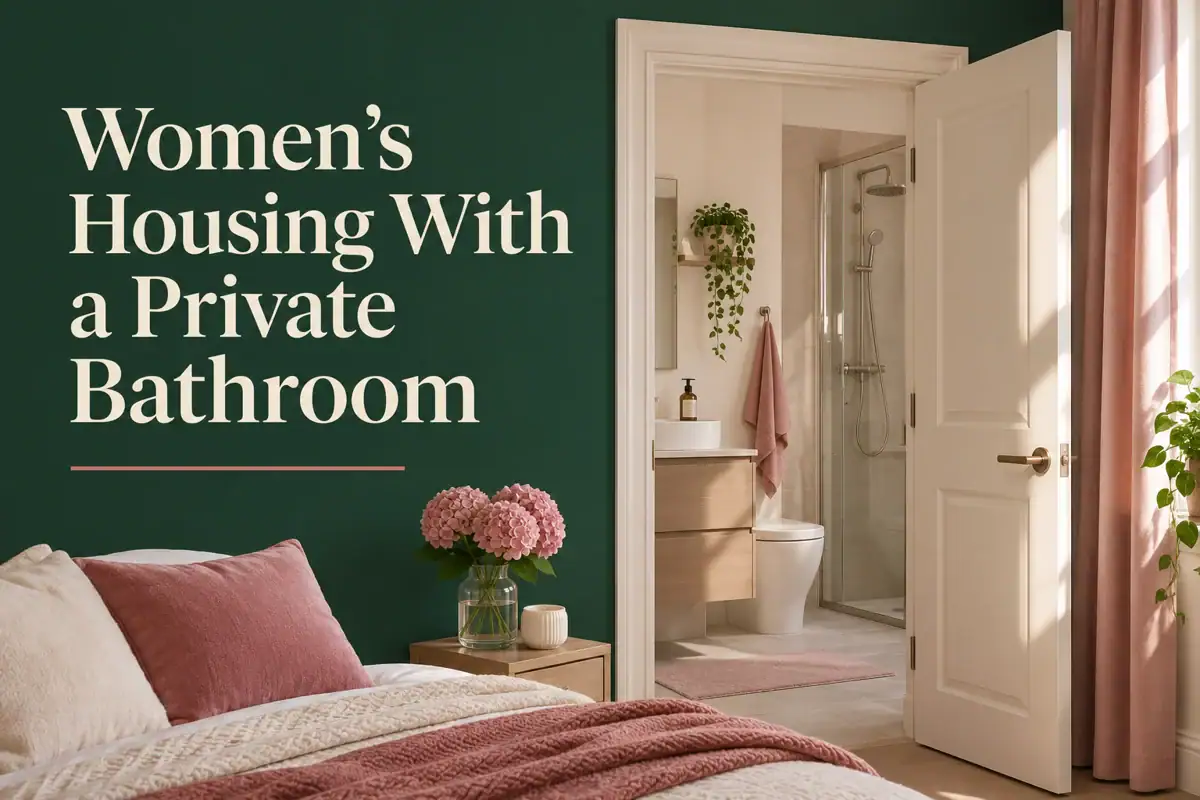
Women’s Housing With a Private Bathroom in Riyadh: What to Check
What does a private bathroom mean in women’s housing?
When comparing women’s housing with a private bathroom in Riyadh, ask two different questions. Is the bathroom reserved for your use, and is its door inside your bedroom? An en-suite usually describes the position of the door. Exclusive use describes who can use the bathroom during the stay. A bathroom can sit outside a bedroom and still be assigned to one resident. A bathroom inside a twin room may be reserved for that room while serving both residents. Confirm the layout and the people who share it before accepting a room.
That distinction helps you look beyond a listing label. You might prioritise stepping directly into the bathroom from your bedroom, or simply need a space where you have your own storage and control of your morning routine. Decide which part of privacy matters before asking the residence to explain the layout. If you also need a private entrance or kitchen, check those separately. Our women’s room categories give you a starting point for asking what applies to a specific room at Lavuren.
Three layouts to distinguish when you enquire
An en-suite in a single-occupancy room is the simplest layout to describe. It is accessed from within the bedroom, but you should still check that it is assigned exclusively to you. Make sure the room shown in a photograph is the same unit or category you are considering. Some room types share a name despite variation in layout. Where the interior connection is essential, request a straightforward confirmation for the room you would actually receive.
A dedicated bathroom outside your room can be a workable option if the residence clearly assigns it and explains how access is managed. Ask what you pass through on the way there, whether visitors or other residents use that part of the building, and whether the bathroom has individual storage. If you would need to step into a common corridor, consider how that fits the moments you use it most, such as preparing for work early or getting ready for sleep. Verify the normal routine before deciding.
A bathroom reserved to a room with two occupants is private to the room, but each resident shares it with the other. Ask whether the room can have one or two residents and what the proposed occupancy is for your stay. A listing might mention a private bathroom and a twin room without making the relationship obvious at first glance. If your requirement is sole use, name that requirement directly. The residence guidelines can help you prepare questions about shared areas.
Check the route between the bedroom and bathroom
During a viewing, follow the natural route from your bedside to the bathroom door. Where do the doors open? Is there a shared passage or living room along the way? Can you carry a towel and toiletries comfortably? If the door opens on a corridor, ask who normally uses the corridor and in what circumstances others would need access to the bathroom. For some people the extra steps make little difference. For others, the layout changes how they use the room in the early morning or late evening.
If you view remotely, ask for a simple plan or a continuous view from the room to the door if the provider can arrange this appropriately. A close-up of the sink and shower does not establish their location relative to the bedroom. Ask which photograph belongs to which category and whether the pictured layout is typical or confirmed for the unit under discussion. Respect the privacy of current residents. A diagram is enough to resolve most questions about access and doors without asking the team to show occupied space.
Also review how the bathroom relates to the rest of the unit. A dedicated bathroom may be accessible from a shared corridor while a separate portion of the room remains private. A studio may place bedroom, storage and bathroom within one enclosed unit but have a kitchen in a shared part of the development. Separate the entrance, sleeping space, bathroom, kitchen and other common areas on your notes. Then view the broader furnished housing checklist for questions about the proposed room and its services.
Look at everyday use and cleaning before you decide
Use an ordinary morning as a practical test. Picture where you will put clean clothes, used towels and toiletries. Can you reach the proposed storage easily and keep the walkway clear? Is there somewhere to leave a towel to dry in accordance with the room rules? Ask whether there is storage inside the bathroom or whether you should use a small personal bag. If the room is shared, determine whether you each have a place for daily items. The important detail is whether the arrangement works with what you will carry and use.
Check lighting around the mirror and door, the shower arrangement, the movement needed to open the door and the position of the floor transition. Where allowed during the viewing, ask the provider to demonstrate the taps, shower and ventilation. If you notice persistent odour or staining, ask how it will be investigated or addressed. Note what you see as an observation. Leave any technical diagnosis to the appropriate maintenance team. The furnished accommodation viewing guide offers related questions for the whole room.
Clarify who handles routine cleaning. Ask whether it is done by you, by a provider, or according to a shared arrangement. Where work may involve entering a bedroom, ask how notice is given and how entry is coordinated. If cleaning has an agreed schedule, find out what happens when you need to change it. Confirm which supplies residents provide themselves. Answers to these questions are part of how privacy works in practice, even when the layout is clear and the bathroom is assigned to you.
Ask how availability works if the room allocation changes
Sometimes a residence can confirm that a category offers bathrooms of a certain type but cannot name the final room until closer to move-in. For your notes, write down what is guaranteed for the category and what remains subject to assignment. If your plans depend on direct bathroom access or sole use, ask whether the team can make that point explicit. If a proposed replacement room would have a different layout, ask when you would learn about the change and what options you could discuss.
Make your requirement precise in writing. You might say “I am interested in [room category]. Is the bathroom exclusively for me throughout the stay, or is it shared with another resident? Is its door inside the bedroom, or do I reach it from shared space? Could you identify which parts of the layout can vary between units? Please confirm the arrangement for the room I would actually receive when it is assigned.” Add your dates so the team can answer in the context of the relevant offer.
If the word “private” appears in the reply, ask the provider to answer the layout and occupancy questions in plain terms. Keep the reply date and the relevant room reference together. When you return to the conversation, mention that reference rather than asking the team to confirm an earlier generic brochure. If the picture and written answer differ, request clarification before you commit. This is especially important if you only have time for a remote viewing.
Compare two realistic options with the same criteria
One applicant compares a room with a private bathroom across a short shared hallway and a twin room with a bathroom inside it. She works early and needs sole use because her routine starts before her colleague’s. She may prefer the first option if she can confirm that no one else uses the bathroom. Another resident may live with a person she knows and value getting straight from the bedroom to the shower. If both accept the shared arrangement and can coordinate their schedules, the second option could suit their needs.
Run the comparison during the part of your day that is most constrained. Ask how your earliest departure, latest return or preparation for an appointment will work. Consider access, storage, cleaning and the condition of the fixtures. Give each item a short status such as confirmed, would need a change, or awaiting an answer. Record which items affect the decision. Seeing the layout in relation to your routine makes it easier to choose a room that works after the initial viewing.
If accessibility matters, ask for the specific measurements you need rather than relying on a category name. Useful details may include the clear opening of the door, the shower threshold and the space available to turn or position any mobility aid you use. Ask the provider if you can check dimensions in the actual room, and identify any route from the building entrance or lift that also needs to work. The right details depend on your own needs and the exact layout. Do not move or add fittings without the residence’s agreement.
Keep a short record that can travel with you
Use one note per viewing. Record the room category, who can use the bathroom, where its door opens and who is responsible for cleaning. For each detail, mark whether you observed it or whether the provider confirmed it. Add a blank line for the issue you would contact the team about. If you return to view several rooms, the record will keep a bathroom shown in one category from influencing an offer in another. Put any personal requirement next to the relevant question so you can ask for an answer without sharing information unrelated to your stay.
Pay particular attention to any condition that could change your decision. If the only remaining question is where to store towels, you may handle that on arrival. If the arrangement might require you to share with another resident, obtain an answer while you still have time to consider the outcome.
Confirm the arrangement again at handover
During handover, compare the actual bathroom access with the description you received. Note any visible condition issues through the provider’s designated process. Ask for the maintenance contact and confirm how the team gets access if a repair is needed. If a different room is offered, repeat the same two basic questions about who uses the bathroom and where its door opens. A few minutes at this stage can prevent confusion once you have put away your belongings.
If you are considering Lavuren, use the contact page to find the team’s channels. Share the dates you have in mind, the category you want to discuss and whether you need exclusive use, direct access from your bedroom, or both. Ask for the room arrangement that actually applies to your enquiry. Lavuren is a women’s residence and discusses room availability and booking arrangements directly through its communication channels.