Women’s Housing Listings in Riyadh: A Verification Guide
A convincing photograph can help you imagine a room, but it cannot tell you who is entitled to offer it, whether the arrangement is still available or which details apply to you. When you search for women’s housing in Riyadh, the useful question is not simply “Does this look comfortable?” It is also “Can I connect this listing to a real provider, a specific room and a clear proposal?”
Start with four checks: identify the source, confirm the contact independently, establish exactly which room and occupancy are being discussed, and keep the current proposal in writing. Use the relevant official verification service when an advertisement or intermediary falls within its scope. A photograph, badge or friendly conversation should not replace those checks.
This guide helps students, employees and women moving to Riyadh organise a careful enquiry. It does not certify any particular listing, determine the legal classification of an agreement or guarantee that completing a checklist removes every risk.
Cover: an AI-generated conceptual illustration, not a photograph of Lavuren facilities or a display of actual customer ratings.
Separate discovery from confirmation
You may discover accommodation through a search result, a social account, a directory or a message from a friend. Treat that first encounter as a lead. The place where you found the listing is not automatically the place where every important detail should be confirmed.
Write down the advertised name, the page address and the date you saw it. Then establish how the provider itself describes the accommodation. A directory may shorten a description, combine several room categories or retain information after circumstances change. That does not settle whether a particular room is available now.
Keep three stages separate in your notes: found, checked and confirmed. A room can be interesting enough to investigate while still having unanswered questions. This simple distinction makes it less tempting to fill gaps with assumptions just because the photographs suit your taste.
Confirm the contact through an independent route
If someone sends you a phone number or a new account, compare it with the provider’s own established contact information. Navigate to the known website yourself rather than relying only on a link supplied in the same conversation. Ask the provider whether the person or channel is authorised to discuss the proposal.
Record the answer without collecting unnecessary personal information about the person responding. You need to understand the business role and the appropriate channel, not build a private file about an employee. If two channels give different instructions, stop treating either instruction as settled until the provider explains the discrepancy.
For Lavuren enquiries, begin with the contact page. A person mentioning the Lavuren name elsewhere does not, by itself, establish that the person represents the residence. Ask the team directly about any proposed arrangement and the channel through which it should continue.
Use official checks for the question they actually answer
The Saudi Real Estate General Authority provides real-estate enquiry services, including advertising-licence and FAL-licence enquiries. Where relevant to the advertisement or intermediary, use the appropriate official service and compare the returned information with what you were given. Ask the authority if the applicable category is unclear.
An enquiry result answers a defined administrative question. It does not show the condition of a mattress, confirm your preferred room or establish that a service meets your personal routine. Keep those checks in separate parts of your record.
Do not assume that every residence arrangement has the same regulatory classification. This article does not assess Lavuren’s licence details or make a claim about a particular advertiser’s compliance. It points you towards the official channel for the relevant verification instead of presenting an unofficial screenshot as a legal conclusion.
Match the room, the building and the proposal
A provider can have several locations or room categories. Ask whether the photographs show the actual room being discussed, an example from the same category or a different space. Each answer changes what still needs checking.
Give the room a clear reference in your correspondence using the provider’s own naming system. Confirm the occupancy arrangement, the areas used privately and the areas shared with others. “Private” can be an incomplete description unless you know which parts of the arrangement it covers.
The private-versus-shared accommodation guide can help you frame those questions. A room category is a starting point for discussion; it should not be treated as confirmation that the exact arrangement you need is available.
Read images as illustrations of a claim
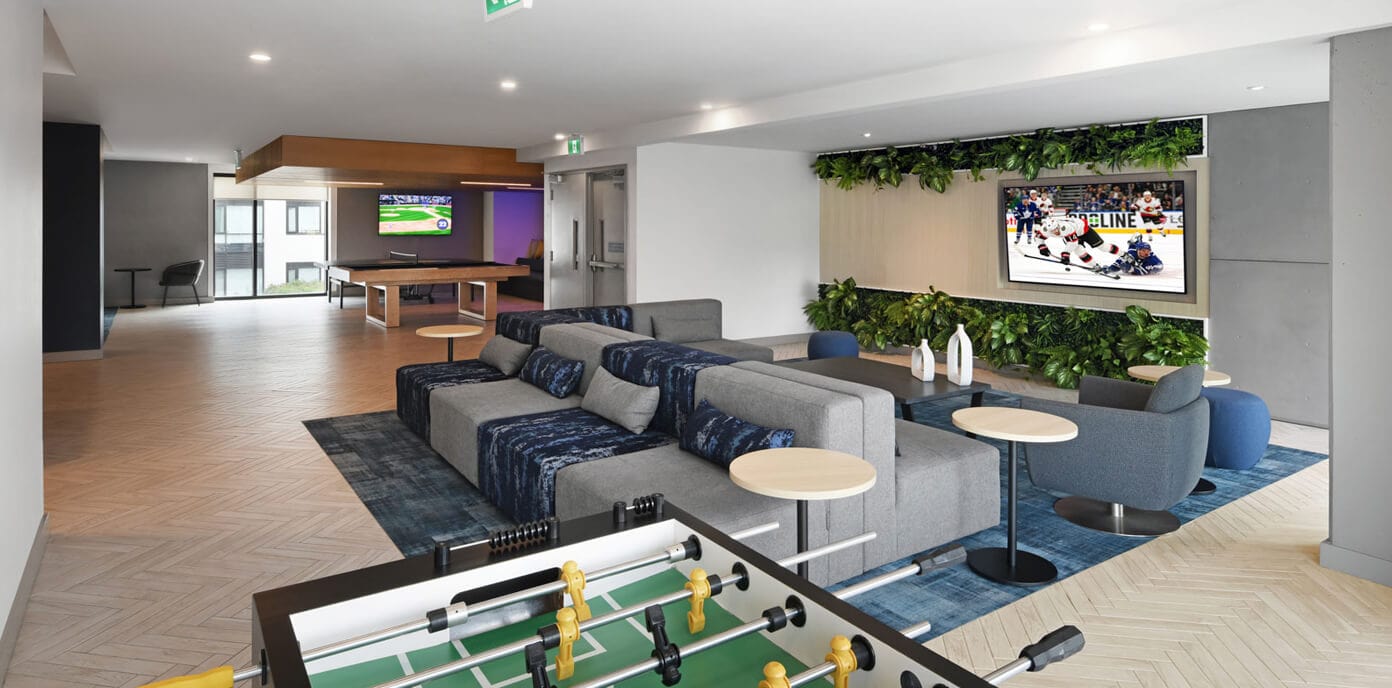
Look for what a photograph actually shows. A bed does not establish the full occupancy. A desk does not confirm reliable internet. A shared seating area does not prove that it can be reserved for a private meeting. Turn each assumption into a question about the arrangement offered to you.
The US Federal Trade Commission’s rental-listing guidance describes copied images and changed contact details as one way misleading offers are created. Its general warning is useful; US reporting procedures and legal rules should not be treated as Saudi procedures.
Ask for a current, relevant view of anything important that is missing. Concept images should be identified as such. A visual check is one part of your process, alongside contact and proposal verification, rather than a reason to stop asking questions.
Plan a viewing around questions you can observe
Prepare a short viewing list before you arrive. Check the proposed room, storage, working space and the route through any areas you would use. Ask permission before photographing, and keep residents and their belongings outside your record.
During a remote viewing, ask the person to explain the relationship between the room and the shared spaces being shown. If part of the proposal is not visible, mark it as unverified. Do not ask for entry codes, resident schedules or access to private areas as proof.
Use the remote-viewing guide or the furnished-room viewing checklist for the physical inspection. This article covers the identity and consistency of the offer, so the two checks complement each other.
Translate broad descriptions into specific answers
Advertising often uses convenient shorthand: furnished, serviced, quiet, connected or suitable for students. Those words become useful when the provider explains what they mean for your proposed room. Ask for the actual inclusions and any conditions relevant to how you will use them.
For example, “What workspace is included in this room?” is more precise than “Is it good for study?” Similarly, ask how a maintenance request is submitted rather than assuming a response time from a general service description. Keep optional arrangements separate from confirmed inclusions.
Review Lavuren’s resident-services information and prepare a focused enquiry. Nothing in this checklist adds a service or changes a residence policy. The team must confirm the scope that applies to your actual proposal.
Keep a verification record without collecting too much
A useful record can fit on one page. It should help you see what is known and what is missing, rather than collect every message or document you encounter. Give each important statement an identifiable source and a date.
| Item | What to record | Next step if unclear |
|---|---|---|
| Provider and contact | The established channel and confirmation of the representative’s role | Ask the provider independently |
| Actual room | Room reference, occupancy and whether images are representative | Request a specific explanation or viewing |
| Official enquiry | The relevant result and when it was checked | Use the official service or ask the authority |
| Services and terms | The current written proposal | List the unanswered points |
| Availability | What the team has actually confirmed | Keep the enquiry provisional |
Store the record privately. There is no need to publish documents, a room identifier or another person’s contact details in order to compare your own options.
Share personal information in stages
Your first enquiry can usually describe your accommodation needs without revealing your entire personal history. Ask what information is required for the next step, why it is needed and which established channel should receive it. An unanswered request for sensitive documents should not become routine simply because it appears in a message.
Never send passwords or one-time authentication codes to someone discussing accommodation. If a link asks you to sign in, establish which service it belongs to and why you need it before entering anything. Return to the service through a route you know if you are uncertain.
The women’s housing privacy guide covers everyday boundaries. Apply the same idea before moving: share what is needed with the appropriate recipient, and keep unrelated family, study and employment information outside the conversation.
Pause when instructions change unexpectedly
A late change in the named contact, destination, room or required action deserves a fresh check. Ask what changed and why, then confirm it through the established provider channel. Do not assume an earlier verification covers an entirely different proposal.
If you are being rushed, state the unanswered question plainly: “I have not yet confirmed which room this proposal concerns.” You do not have to complete a consequential step just to keep the conversation friendly. Pressure is a reason to slow the process, not proof on its own that a named person has committed wrongdoing.
When an instruction involves payment, use the provider’s established procedure and obtain the relevant written explanation before acting. This guide does not recommend a payment product, approve a transaction or promise recovery of funds. Seek appropriate assistance promptly if you suspect a problem.
A fictional example of two similar-looking offers
Imagine two posts using a similar room photograph. One leads to an established provider channel that identifies the room and clarifies the occupancy. The other moves the conversation to a new account and leaves the room reference unanswered. The useful distinction is the quality of the verification, not which post has more attractive colours.
The second enquiry remains unresolved until those questions are answered. You do not need to decide publicly whether it is fraudulent. You can simply decline to rely on an unverified proposal and use the appropriate reporting channel if there is a concrete concern.
This is an invented teaching example, not a report about Lavuren or another residence. It demonstrates how to keep “not confirmed” separate from both “definitely safe” and “definitely false.” That distinction helps you act cautiously without making unsupported accusations.
Use messages that ask for evidence rather than reassurance
To confirm identity: “I found this listing through ___. Please confirm whether this account or representative is authorised to discuss your accommodation, and which channel I should use for the next step.”
To confirm the proposal: “Please identify the room being offered, the occupancy, the included services and the relevant availability. Are these photographs of that room or an example of the category?”
To resolve a difference: “The listing and our conversation describe this point differently: ___. Which description applies to the current proposal, and can you confirm it in writing?” These are enquiry templates, not notices or agreements. Keep your questions short enough that the answer can address each point clearly.
When you need to report a concern
Preserve the relevant listing address, dates and messages in a private record. Contact the platform or the appropriate Saudi authority through its official current channels. If a financial account or personal information may be affected, seek help from the relevant institution through a contact route you establish independently.
Avoid reposting sensitive documents or asking an open group to identify a private individual. Give factual information to the body handling the concern, and distinguish what you directly observed from what you suspect. This article does not guarantee the result of a report or determine which procedure applies to an individual case.
Frequently asked questions
Does a licence result guarantee the room’s condition?
No. Use the result for the question the official service answers. The physical room, occupancy, service scope and current availability still need their own checks.
Can reviews prove that the person messaging me is authorised?
No. A review concerns an experience; it does not establish the identity of your current correspondent. Read the guide to interpreting women’s housing reviews, then verify the current contact separately.
What should I confirm before relying on residence terms?
Use the residence-agreement checklist to connect the room, services, dates and responsibilities. Keep unresolved points visible until the appropriate team answers them.
How do I enquire about Lavuren?
Explore the room categories, review the published guidelines and contact Lavuren directly to confirm the arrangement relevant to you. Lavuren is a women’s residence in Riyadh; residence enquiries and arrangements are handled through contact with the team.